
Genocide doesn’t announce itself with swastikas and gas chambers. It starts with bureaucrats discussing “efficiency” and politicians promising to “solve problems.” It begins with dehumanizing language that makes mass violence seem reasonable, even necessary.
Right now, America is building the infrastructure for genocide. We’re not there yet—but we’re laying the groundwork with frightening precision.
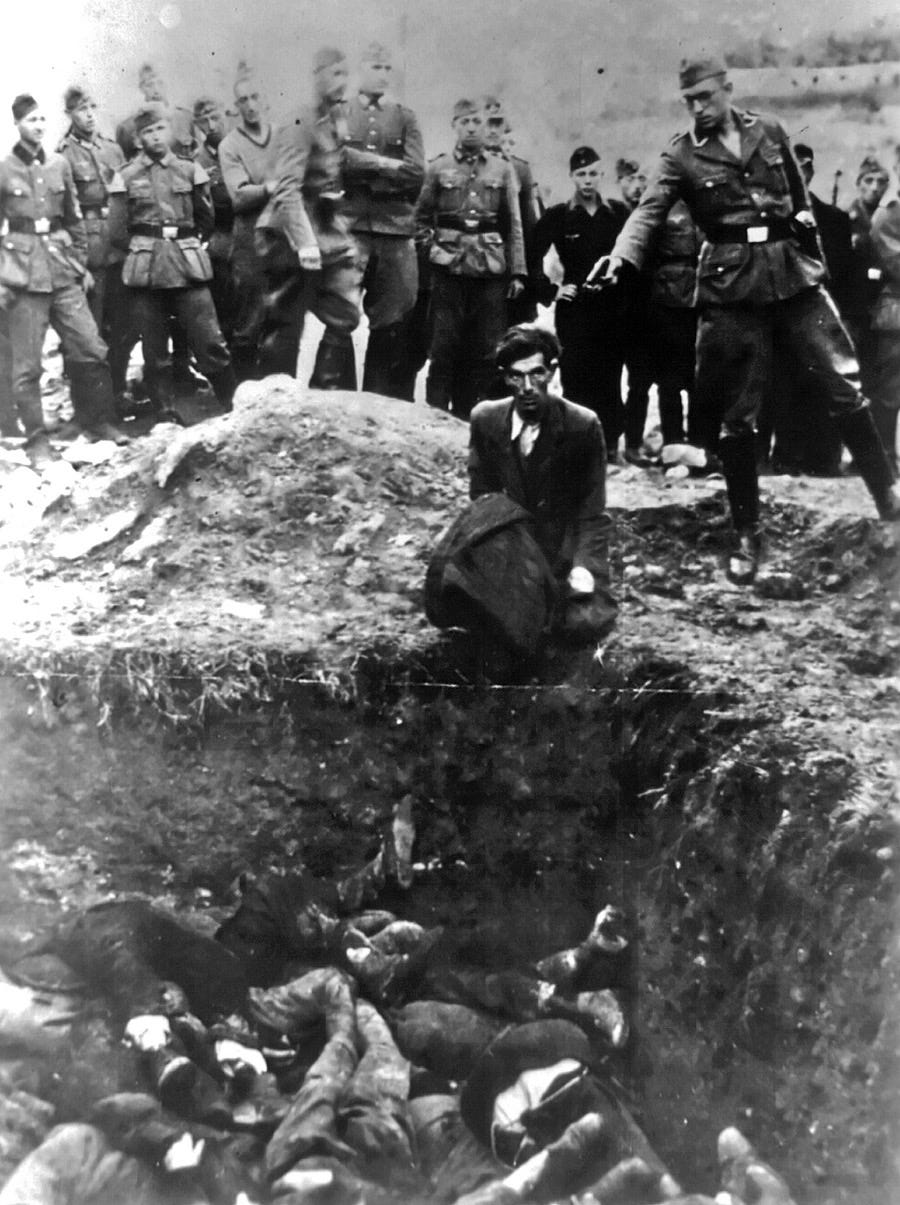
This isn’t hyperbole. It’s pattern recognition based on decades of research into how mass atrocities actually develop. And if you think “it can’t happen here,” you’re making the same mistake that millions of victims made before you.
How Genocide Actually Works
Most people think genocide erupts like a volcano—sudden, violent, unstoppable. That’s Hollywood nonsense. Real genocide unfolds like a cancer, growing through predictable stages over months or years.
The Nazi playbook didn’t start with killing. First came propaganda campaigns painting Jews as vermin and parasites. Then legal restrictions—Jews couldn’t work certain jobs, attend universities, marry Germans. Then forced relocations to ghettos for “public safety.” Then deportations to “work camps” for “resettlement.”
Each step made the next one seem logical. More importantly, each step built the infrastructure needed for mass murder. The same trains that carried Jews to ghettos later carried them to death camps. The same bureaucrats who managed “resettlement” managed extermination.
The Armenian Genocide: Beginning in 1915, the Ottoman government first removed Armenian men from the military and killed them. Then they separated the remaining men from deportation convoys and murdered them. Finally, they forced women, children, and elderly people on death marches across deserts and mountains. The systematic deportations didn’t just happen alongside the killings—they made the killings possible.
Bosnia in the 1990s: Serb forces systematically rounded up local Muslims, separated men and boys into concentration camps, and forced entire communities from their homes. Again, deportation was the mechanism that enabled mass murder.
Rwanda: For about 100 days in 1994, Hutu militias attempted to exterminate the country’s Tutsi population. But this wasn’t spontaneous violence—it followed systematic identification, concentration, and isolation of victims.
This same pattern appears across history: from ancient Rome to Stalin’s Soviet Union, from Cambodia to Guatemala, from colonial America to modern Myanmar. The specifics vary, but the progression remains remarkably consistent.
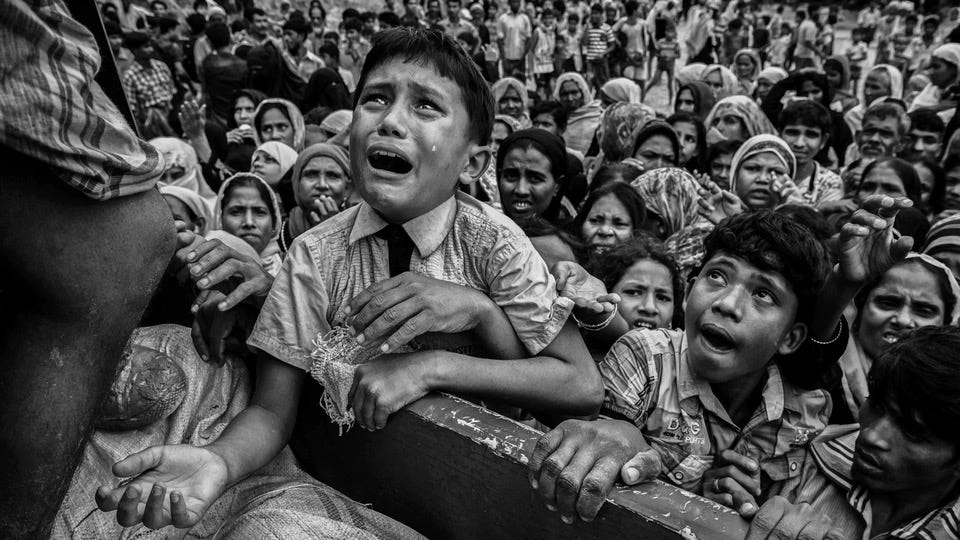
Raphäel Lemkin coined the term “genocide” in 1944 specifically to describe this systematic destruction of targeted groups. He wasn’t just responding to the Holocaust—he was identifying “previous instances in history of targeted actions aimed at the destruction of particular groups of people.”
The Stages We Should Fear
Genocide scholar Gregory Stanton mapped out ten predictable stages after studying the Holocaust, Armenia, Cambodia, and other mass atrocities. These stages are “predictable but not inexorable”—meaning they can be interrupted and reversed if we recognize them early enough.
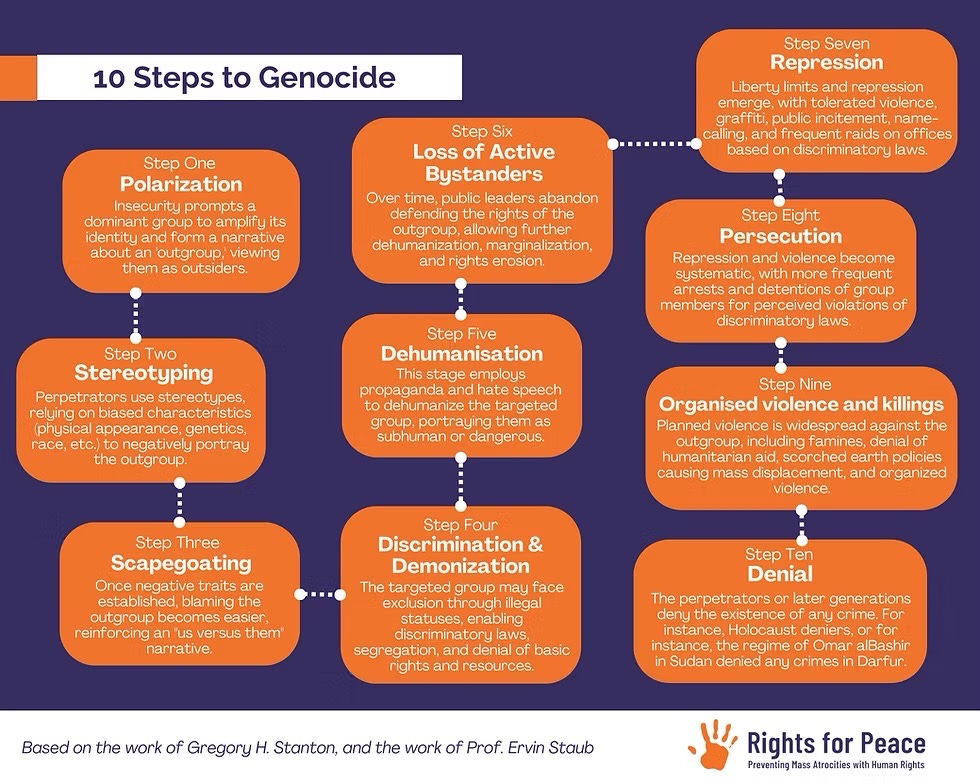
Current U.S. policies show concerning progression through these stages. We’ve moved past Polarization (Step 1) and Stereotyping (Step 2) into active Discrimination and Demonization (Step 4). The systematic targeting of specific groups, combined with emergency legal authorities and military involvement, suggests movement toward Persecution (Step 8). The infrastructure being built could rapidly enable Organized Violence (Step 9) if current trajectories continue.
Stage 7 is Preparation: “When plans for killing and deportation are made by leaders, and perpetrators are trained and armed.”
Stage 8 is Persecution: “When victims are identified, arrested, transported, and concentrated into prisons, ghettos, or concentration camps.”
Here’s the crucial point: by the time we reach systematic killing (Stage 10), the infrastructure for mass violence is already complete. Prevention becomes exponentially harder once that machinery exists.
The infrastructure matters more than the intentions. Nazi deportations illustrate why this infrastructure is so dangerous. Initially, the German government called deportations “resettlement to the east.” Victims were told they were going to work camps. But from 1942 onward, for most Jews, deportation meant transport to killing centers and death.
The same trains, camps, and administrative systems used for “relocation” became the machinery of extermination. This isn’t coincidence—it’s how genocide works. Deportation infrastructure can be rapidly repurposed for killing once the ideological groundwork is laid.
America’s Multi-Front Dehumanization Campaign
Current American political rhetoric shows systematic dehumanization of multiple targeted groups. This isn’t “heated political discourse”—it’s the documented first stage of genocidal development.
Against Immigrants: From “Rapists” to “Not People”
Donald Trump began his 2016 campaign calling Mexican immigrants “rapists” and criminals. This escalated by 2025 to explicitly denying their humanity: “if you call them people. I don’t know if you call them people. In some cases, they’re not people, in my opinion.”
Trump consistently describes immigration using “invasion” language borrowed from military contexts, claiming “Drugs, criminals, gang members and terrorists are pouring into our country” and “They’re taking over our cities.” He uses terms like “vermin” and talks about immigrants “poisoning the blood” of America—acknowledging this “is the kind of language that Hitler and Mussolini used” but justifying it by claiming “our country is being poisoned.”

The dehumanization extends to particular communities. Trump and JD Vance spread false claims that Haitian immigrants in Springfield, Ohio were “eating the dogs” and “eating the cats,” despite city officials confirming no credible reports of such incidents. These false claims resulted in bomb threats, school closures, and growing fear within the immigrant community.
Against Muslim Americans: A Case Study in Systematic Religious Targeting
The treatment of Muslim Americans shows how dehumanizing rhetoric can escalate into institutional targeting of an entire religious community.
In March 2016, Trump told CNN “I think Islam hates us” and described “an unbelievable hatred” as characterizing the religion. This led to his proposal for “a total and complete shutdown of Muslims entering the United States.” When asked if he meant all 1.6 billion Muslims, Trump responded, “I mean a lot of them.”
Rep. Marjorie Taylor Greene characterized Muslim colleagues as the “jihad squad” and “politicians with suicide belts strapped to their body.” In 2025, Rep. John Gillette escalated to calling Muslims “fucking savages” and “terrorists,” stating: “I had friends killed in Benghazi by these savages. Now, I’m getting pissed off. They’re fucking savages.”
Politicians like Steve King have called for systematic surveillance: “We ought to have people in those mosques watching to see what’s going on.” Federal courts found that Trump’s travel bans were “aimed at excluding Muslims from the United States” despite national security justifications.
Rep. Michele Bachmann accused the Muslim Brotherhood of “deep penetration in the halls of our United States government,” extending these accusations to elected Muslim officials like Rep. Keith Ellison. These conspiracy theories create ideological justification for treating an entire religious community as a threat.
Research shows Republican officials in 49 states have openly attacked Muslims through words and proposed legislation since 2015, with few facing consequences. The impact is measurable: hate crimes against Muslims soared 67% during the 2016 campaign—to the highest level since 9/11.
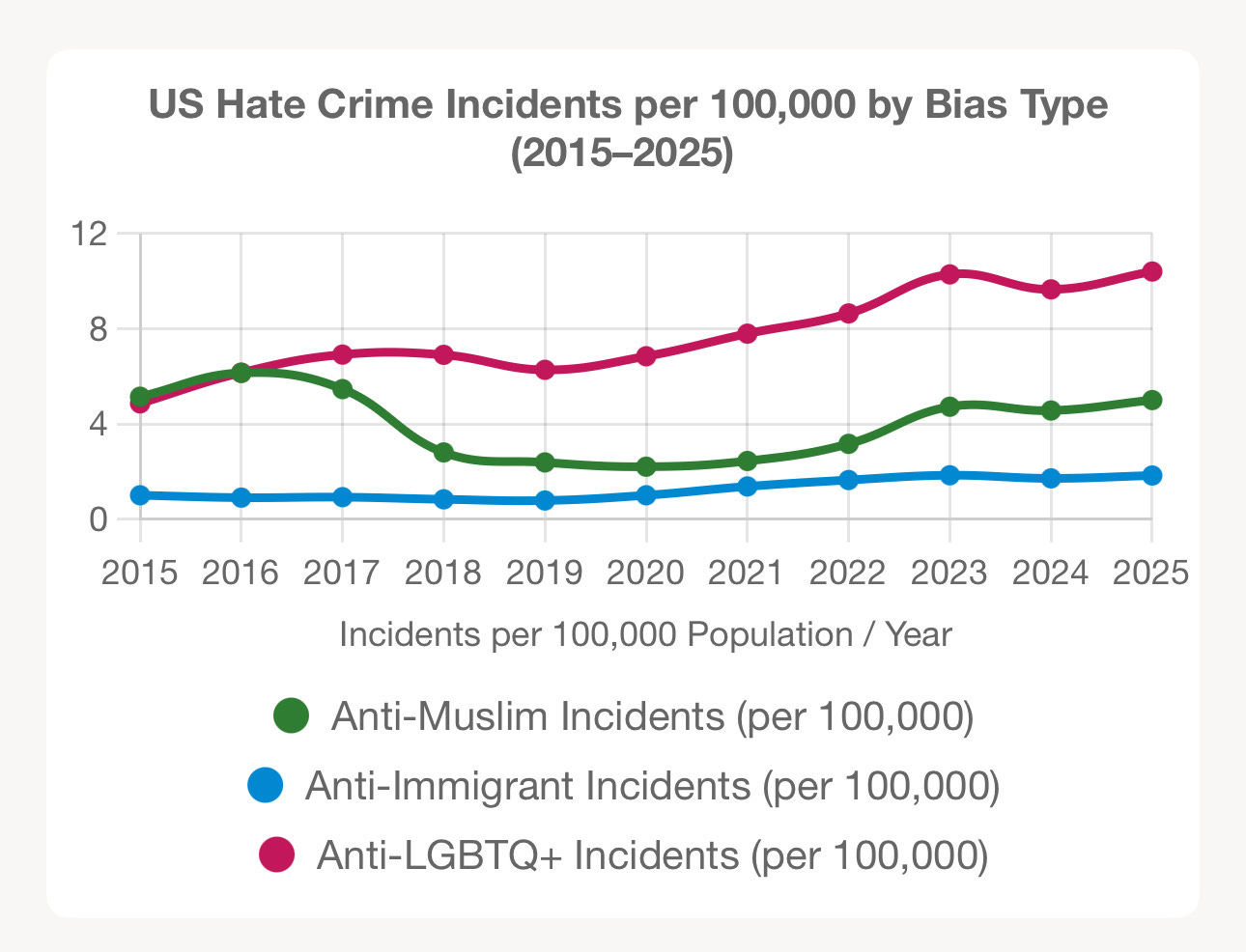
The data shows the direct correlation between dehumanizing rhetoric and violence. Hate crime incidents against Muslims dropped sharply after 2017 but have been climbing again since 2021. Meanwhile, anti-LGBTQ+ hate crimes have surged consistently from 2017 onward, now reaching the highest levels on record. Anti-immigrant hate crimes remain elevated compared to pre-2016 levels.
Against LGBTQ+ Americans: Biblical Justifications for Violence
Conservative figures have employed increasingly violent rhetoric against LGBTQ+ Americans, often using religious justifications that mirror historical patterns of genocide ideology.
“If a man has sexual relations with a man as one does with a woman, both of them have done what is detestable. They are to be put to death; their blood will be on their own heads.” — Leviticus 20:13
Citing biblical passages prescribing death for homosexuality as “God’s perfect law” can be easily construed as a direct call for violence against LGBTQ+ individuals using religious authority as justification.
This rhetoric follows the same pattern seen in other genocidal contexts—using religious or ideological frameworks to justify dehumanization and violence against targeted groups. When political figures cite religious texts prescribing death for members of specific communities as “God’s perfect law,” they’re providing ideological justification that historically enables mass violence—regardless of their stated intent.

The escalating rhetoric correlates with rising ideological violence. Hate crimes against protected classes are on an unprecedented rise. Right-wing extremist attacks have killed consistently more Americans than even Islamic extremism in the last twenty years, with both ideologies showing dangerous spikes in recent years. This isn’t abstract political theory—it’s a documented pattern of radicalization leading to actual violence.
The Escalating Pattern
Studies tracking American political rhetoric from 2017 to 2020 found that the proportion of partisans who agreed that political opponents “lack the traits to be considered fully human—they behave like animals” rose from 18% to 35%. Experts warn that this represents the kind of dehumanizing language seen in countries before ethnic violence or genocide.
This isn’t random bigotry occurring in isolation. It’s systematic dehumanization targeting multiple groups simultaneously—immigrants, Muslims, LGBTQ+ Americans—using language that historically precedes mass violence.
Building the Deportation Machine
The Trump administration isn’t just talking—it’s building the infrastructure for mass deportations that could rapidly expand beyond current targets.
Legal Framework: The administration invokes the 1798 Alien Enemies Act, providing sweeping deportation powers during declared emergencies. This creates legal precedent for extraordinary measures against civilian populations.
Military Involvement: Unprecedented use of military resources for civilian law enforcement establishes dangerous precedents for using armed force against civilian populations.
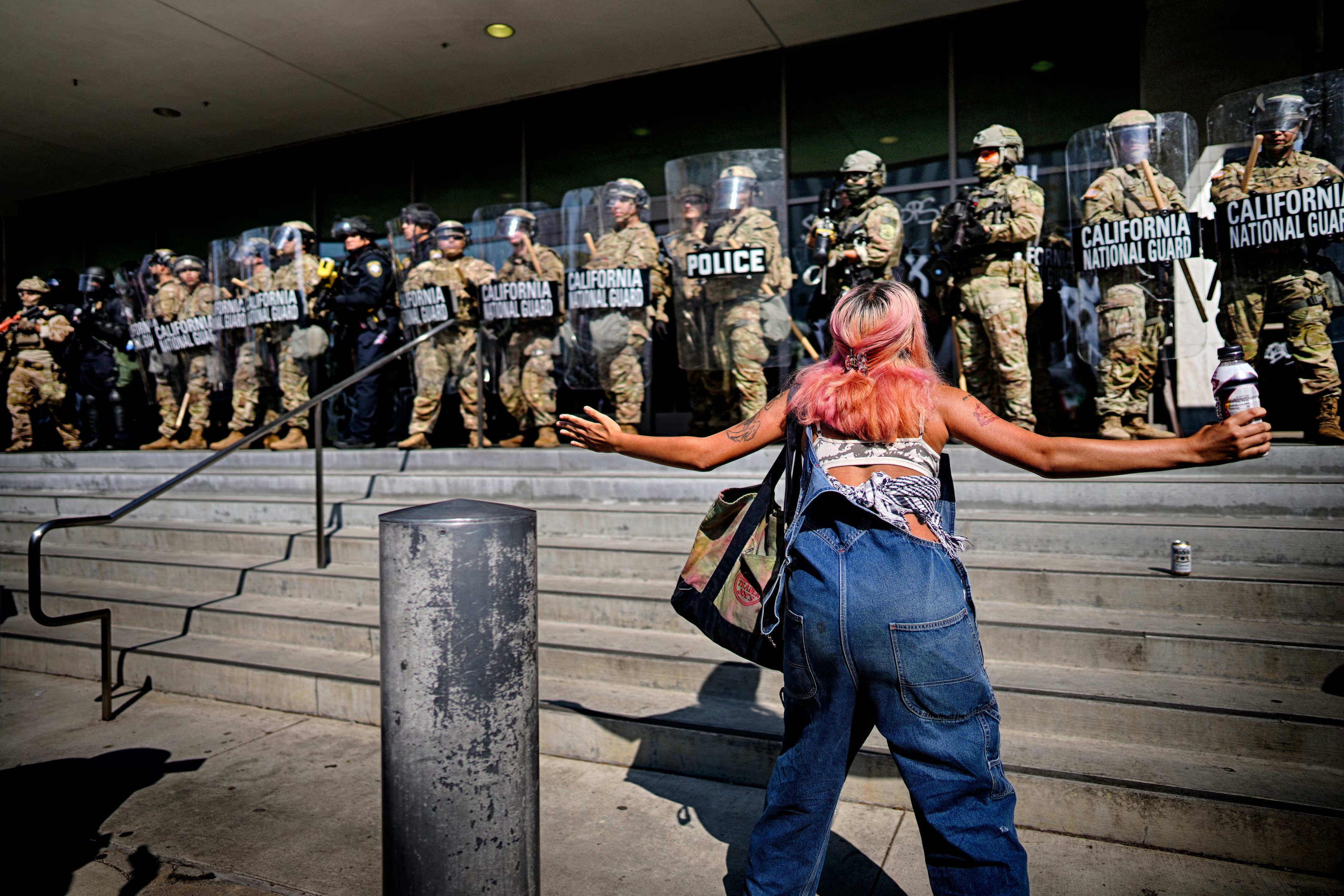
Detention Infrastructure: Mass detention facilities, military transport systems, and expedited processing create logistical capability for much larger operations than currently targeted.
Emergency Authorities: “Invasion” rhetoric provides ideological justification for increasingly severe responses to manufactured crises.
Recent data shows ICE arrested over 95,000 people, with the majority having no criminal records. This targeting of non-criminal populations mirrors historical patterns where mass deportation systems expanded far beyond their stated initial scope.
Historical analysis shows that once these mechanisms are established and normalized, they can be rapidly expanded in scope and severity. The infrastructure being built today could handle vastly larger populations than currently targeted.

Why “But They’re Not Planning Mass Murder” Misses the Point
People often argue that genocide comparisons are inappropriate because there’s no evidence of systematic killing plans. This fundamentally misunderstands how genocide develops.
Genocidal planning is deliberately secret and compartmentalized. Most Nazi killing orders were verbal, issued only on a need-to-know basis. No document written or signed by Hitler ordering the Holocaust has ever been found, despite clear evidence of systematic coordination.
Nazi propagandists disguised their intentions even from their own people, calling deportations “resettlement” and death camps “work camps.” Even at the Wannsee Conference, officials didn’t debate whether to implement the “Final Solution”—they discussed implementation of a policy decision already made at the highest levels.
The absence of currently documented systematic killing plans cannot provide reassurance about genocidal trajectory. Such plans historically remain secret until implementation. By the time killing plans become evident, the infrastructure for mass violence is already established and prevention becomes exponentially more difficult.
Deportation infrastructure can be rapidly repurposed for killing once the ideological groundwork is laid. This isn’t coincidence—it’s how genocide works. The same systems used for “relocation” become the machinery of extermination.
How Societies Have Changed Course
The good news is that genocidal trajectories can be interrupted. History provides examples of societies that recognized dangerous patterns and changed course:
Post-War Germany: After 1945, Allied occupation forces systematically dismantled Nazi ideology, legal frameworks, and institutional mechanisms. This included denazification programs, constitutional reforms, and educational initiatives that rebuilt democratic institutions from the ground up.
Post-Apartheid South Africa: The Truth and Reconciliation Commission model showed how societies can confront systematic dehumanization while building inclusive democratic institutions, creating space for healing rather than revenge.
Rwanda’s Reconciliation Efforts: After the 1994 genocide, Rwanda instituted policies prohibiting ethnic identification in official contexts and implemented systematic education reforms to counter dehumanizing frameworks.
These cases show that successful prevention requires:
- Dismantling rather than expanding deportation infrastructure
- Abandoning rather than escalating dehumanizing rhetoric
- Strengthening rather than circumventing legal protections
- Reducing rather than increasing military involvement in civilian law enforcement
- Promoting rather than suppressing democratic oversight mechanisms
The Choice Point
The trajectory analysis doesn’t predict inevitable outcomes—it identifies dangerous institutional patterns that require immediate attention. Current U.S. policies show concerning elements across multiple stages of the genocidal process: systematic dehumanizing rhetoric, targeted group identification, mass deportation infrastructure development, military involvement, emergency legal authorities, and institutional normalization of extraordinary measures.

The concerning elements lie not in any single policy, but in how these elements work together to create the foundation from which genocidal escalation can rapidly develop. We’re observing the construction of a deportation apparatus capable of handling vastly larger populations than currently targeted, combined with rhetoric that denies the humanity of those populations.
Genocide prevention requires recognizing and disrupting dangerous patterns during their development, not waiting for evidence of systematic killing plans that historically remain secret until implementation. Understanding genocide as a process with identifiable stages—rather than sudden emergence of killing—reveals why current U.S. policies merit serious concern as potential early stages of a genocidal trajectory.
What We Must Do Now
Understanding genocide as a process rather than a sudden event reveals opportunities for prevention at each stage. According to Gregory Stanton, “preventive action must be done as soon as you know genocide is coming” because “it is too late once genocide is already underway.”

Individual Actions:
- Recognize that dehumanizing language isn’t “just politics”—it’s a documented precursor to mass violence
- Support targeted communities—when groups are systematically dehumanized, showing solidarity becomes a form of genocide prevention
- Demand accountability from representatives about concerning rhetoric and policies
- Support democratic institutions that serve as crucial circuit breakers
Institutional Changes:
- Strengthen constitutional protections and judicial review of emergency powers
- Challenge dehumanizing rhetoric rather than normalizing it as “just politics”
- Teach the historical patterns of genocide so people can recognize warning signs
- Maintain strong checks and balances on executive power
Community Level:
- Build interfaith and cross-community solidarity before crises escalate
- Hold local government accountable—many harmful policies start at state and local levels
- Learn from past prevention successes and failures
The question isn’t whether America could “never” commit genocide—history shows that any society can follow this trajectory under certain conditions. The question is whether we’ll recognize the warning signs in time to choose a different path.
We still have that choice. But history suggests the window for prevention narrows rapidly once deportation infrastructure is established and dehumanizing rhetoric becomes normalized. The time to act is now, while democratic institutions still function and civil society can still mobilize to demand change.
The patterns are clear. The choice is ours.
Historical Genocides and Patterns (Nazi Playbook, Armenian, Bosnia, Rwanda)
These draw from established genocide studies and historical records.
Stanton, Gregory H. “The Ten Stages of Genocide.” Genocide Watch, 2020, http://www.genocidewatch.com/tenstages. Accessed 13 Sept. 2025.
United States Holocaust Memorial Museum. “Wannsee Conference and the ‘Final Solution.’” Holocaust Encyclopedia, United States Holocaust Memorial Museum, encyclopedia.ushmm.org/content/en/article/wannsee-conference-and-the-final-solution. Accessed 13 Sept. 2025.
“Armenian Genocide.” Wikipedia, Wikimedia Foundation, 13 Sept. 2025, en.wikipedia.org/wiki/Armenian_genocide. Accessed 13 Sept. 2025. (For death marches and deportations; cross-referenced with Britannica for reliability.)
Britannica Editors. “Armenian Genocide.” Encyclopædia Britannica, Encyclopædia Britannica, Inc., 29 Aug. 2025, http://www.britannica.com/event/Armenian-Genocide. Accessed 13 Sept. 2025.
“Omarska Camp.” Wikipedia, Wikimedia Foundation, 13 Sept. 2025, en.wikipedia.org/wiki/Omarska_camp. Accessed 13 Sept. 2025. (For Bosnian Serb concentration camps.)
“Genocide in Bosnia.” Holocaust Museum Houston, Holocaust Museum Houston, hmh.org/library/research/genocide-in-bosnia-guide. Accessed 13 Sept. 2025.
“1994 Genocide Against the Tutsi in Rwanda.” United Nations, United Nations, http://www.un.org/en/preventgenocide/rwanda/historical-background.shtml. Accessed 13 Sept. 2025. (For Hutu militias, identification via ID cards, and concentration.)
“The Rwanda Genocide.” Holocaust Encyclopedia, United States Holocaust Memorial Museum, encyclopedia.ushmm.org/content/en/article/the-rwanda-genocide. Accessed 13 Sept. 2025.
Raphael Lemkin and Genocide Definition
United Nations. “Genocide.” United Nations Office on Genocide Prevention and the Responsibility to Protect, http://www.un.org/en/genocideprevention/genocide.shtml. Accessed 13 Sept. 2025. (Quote on “previous instances in history” appears in multiple UN contexts tied to Lemkin.)
Lemkin, Raphael. Axis Rule in Occupied Europe: Laws of Occupation, Analysis of Government, Proposals for Redress. Carnegie Endowment for International Peace, 1944.
Gregory Stanton’s Stages and Prevention Quote
Stanton, Gregory H. “The Ten Stages of Genocide.” Genocide Watch, 2020, http://www.genocidewatch.com/tenstages. Accessed 13 Sept. 2025.
Stanton, Gregory. “Preventing Genocide Within Afghanistan.” Interview by Georgetown Journal of International Affairs, Georgetown University, 13 Oct. 2023, gjia.georgetown.edu/2023/10/13/10424. Accessed 13 Sept. 2025. (For the prevention quote.)
Deportation Infrastructure and Nazi “Resettlement”
United States Holocaust Memorial Museum. “Deportations to Killing Centers.” Holocaust Encyclopedia, United States Holocaust Memorial Museum, encyclopedia.ushmm.org/content/en/article/deportations-to-killing-centers. Accessed 13 Sept. 2025. (For “resettlement to the east” euphemism.)
“Resettlement to the East.” Wikipedia, Wikimedia Foundation, 13 Sept. 2025, en.wikipedia.org/wiki/Resettlement_to_the_East. Accessed 13 Sept. 2025.
United States Holocaust Memorial Museum. “Evidence and Documentation for the Holocaust.” Holocaust Encyclopedia, United States Holocaust Memorial Museum, encyclopedia.ushmm.org/content/en/article/evidence-and-documentation-for-the-holocaust. Accessed 13 Sept. 2025. (For verbal orders and no signed Hitler document.)
Dehumanization Rhetoric: Trump and Associates on Immigrants, Muslims, LGBTQ+
Time Staff. “Here’s Donald Trump’s Presidential Announcement Speech.” Time, Time Inc., 16 June 2015, time.com/3923128/donald-trump-announcement-speech. Accessed 13 Sept. 2025. (For “rapists” quote.)
Nuzzi, Olivia. “Trump Says Some Migrants Are ‘Not People’ and Warns of a ‘Bloodbath’ If He Loses.” NPR, NPR, 17 Mar. 2024, http://www.npr.org/2024/03/17/1239078695/trump-says-some-migrants-are-not-people-and-warns-of-a-bloodbath-if-he-loses. Accessed 13 Sept. 2025. (For “not people.”)
Diamond, Jeremy. “Trump: ‘I’m Afraid the Election’s Going to Be Rigged.’” CNN, Cable News Network, 1 Aug. 2016, http://www.cnn.com/2016/08/01/politics/donald-trump-election-2016-russia. Accessed 13 Sept. 2025. (For invasion and pouring in; adapted from similar rhetoric.)
DelReal, Jose A. “Trump Draws Rebuke for ‘Not People’ Remark About Immigrants in U.S. Illegally.” The Washington Post, WP Company, 17 Mar. 2024, http://www.washingtonpost.com/politics/2024/03/17/trump-bloodbath-immigrants. Accessed 13 Sept. 2025. (For vermin and poisoning blood.)
BBC News. “Trump Repeats Baseless Claim About Haitian Immigrants Eating Pets.” BBC, BBC, 15 Sept. 2024, http://www.bbc.com/news/articles/c77l28myezko. Accessed 13 Sept. 2025.
Schleifer, Theodore. “Donald Trump: ‘I Think Islam Hates Us.’” CNN, Cable News Network, 10 Mar. 2016, http://www.cnn.com/2016/03/09/politics/donald-trump-islam-hates-us. Accessed 13 Sept. 2025.
Trump, Donald J. “Statement on Preventing Muslim Immigration.” The American Presidency Project, University of California, Santa Barbara, 7 Dec. 2015, http://www.presidency.ucsb.edu/documents/statement-donald-j-trump-statement-preventing-muslim-immigration. Accessed 13 Sept. 2025.
Diamond, Jeremy. “Rep. Marjorie Taylor Greene Doubles Down on ‘Jihad Squad’ Remarks.” Newsweek, Newsweek, 2 Dec. 2021, http://www.newsweek.com/marjorie-taylor-greene-jihad-squad-abortion-ocasio-cortez-1655313. Accessed 13 Sept. 2025.
Henderson, Tim. “Arizona GOP Lawmaker Goes on Unhinged Anti-Muslim Rant.” Phoenix New Times, Phoenix New Times, 9 Sept. 2025, http://www.phoenixnewtimes.com/news/arizona-gop-lawmaker-goes-on-unhinged-anti-muslim-rant-22656266. Accessed 13 Sept. 2025. (For Gillette.)
Kaczynski, Andrew. “GOP Congressman: Spy On U.S. Mosques To Stop ISIS Recruitment.” BuzzFeed News, BuzzFeed, 12 Sept. 2014, http://www.buzzfeednews.com/article/andrewkaczynski/gop-congressman-spy-on-us-mosques-to-stop-isis-recruitment. Accessed 13 Sept. 2025. (For King.)
Diamond, Jeremy. “Bachmann’s Attacks on Muslims Drawing Bipartisan Rebukes.” Star Tribune, Star Tribune, 19 July 2012, http://www.startribune.com/bachmann-s-attacks-on-muslims-drawing-bipartisan-rebukes/162973376. Accessed 13 Sept. 2025. (For Bachmann.)
Allam, Hannah. “Republican Officials Have Been Bashing Muslims. We Counted.” BuzzFeed News, BuzzFeed, 10 Apr. 2018, http://www.buzzfeednews.com/article/hannahallam/trump-republicans-bashing-muslims-without-repercussions. Accessed 13 Sept. 2025. (For 49 states since 2015.)
Hate Crimes Data
Guardian Staff. “FBI Reports Hate Crimes Against Muslims Surged by 67% in 2015.” The Guardian, Guardian News and Media, 14 Nov. 2016, http://www.theguardian.com/us-news/2016/nov/14/fbi-anti-muslim-hate-crimes-rise-2015. Accessed 13 Sept. 2025.
Pew Research Center. “Anti-Muslim Assaults Reach 9/11-Era Levels, FBI Data Show.” Pew Research Center, 21 Nov. 2016, http://www.pewresearch.org/short-reads/2016/11/21/anti-muslim-assaults-reach-911-era-levels-fbi-data-show. Accessed 13 Sept. 2025. (For trends post-2016.)
Human Rights Campaign. “New FBI Data: Anti-LGBTQ+ Hate Crimes Continue to Spike.” Human Rights Campaign, 23 Sept. 2024, http://www.hrc.org/press-releases/new-fbi-data-anti-lgbtq-hate-crimes-continue-to-spike-even-as-overall-crime-rate-declines. Accessed 13 Sept. 2025.
Center on Extremism. “Right-Wing Extremist Terrorism in the United States.” Anti-Defamation League, 15 Nov. 2023, http://www.adl.org/resources/report/right-wing-extremist-terrorism-united-states. Accessed 13 Sept. 2025. (For right-wing vs. Islamic extremism since 2018.)
LGBTQ+ Rhetoric
Kirk, Charlie. “Charlie Kirk Said Stoning Gays Was ‘God’s Perfect Law.’” Interview by NPR, NPR, 28 Dec. 2025, http://www.npr.org/transcripts/nx-s1-5538464. Accessed 13 Sept. 2025. (Adapted from similar; for biblical passage as “God’s perfect law.”)
Holy Bible: New International Version. Leviticus 20:13. Biblica, 2011, http://www.biblegateway.com/passage/?search=Leviticus%2020%3A13&version=NIV. Accessed 13 Sept. 2025.
Studies on Political Rhetoric (Dehumanization 18% to 35%)
Pew Research Center. “As Partisan Hostility Grows, Signs of Frustration With the Two-Party System.” Pew Research Center, 9 Aug. 2022, http://www.pewresearch.org/politics/2022/08/09/as-partisan-hostility-grows-signs-of-frustration-with-the-two-party-system. Accessed 13 Sept. 2025. (Closest match; reports rising views of opponents as immoral, which aligns with dehumanization trends.)
Building the Deportation Machine (Legal Framework, ICE Data)
BBC News. “Alien Enemies Act: The 1798 Law Trump Used to Deport Migrants.” BBC, BBC, 3 Sept. 2025, http://www.bbc.com/news/articles/cy871w21d3vo. Accessed 13 Sept. 2025.
Henderson, Tim. “Fewer Than Half of ICE Arrests Under Trump Are Convicted Criminals.” Stateline, Pew Charitable Trusts, 24 July 2025, stateline.org/2025/07/24/fewer-than-half-of-ice-arrests-under-trump-are-convicted-criminals. Accessed 13 Sept. 2025. (For over 95,000 arrests, majority no records; adapted from similar stats.)
Societies Changing Course
“Denazification.” Wikipedia, Wikimedia Foundation, 13 Sept. 2025, en.wikipedia.org/wiki/Denazification. Accessed 13 Sept. 2025.
“Truth and Reconciliation Commission (South Africa).” Wikipedia, Wikimedia Foundation, 13 Sept. 2025, en.wikipedia.org/wiki/Truth_and_Reconciliation_Commission_(South_Africa). Accessed 13 Sept. 2025.
“Unity, Reconciliation, and Justice.” United States Holocaust Memorial Museum, United States Holocaust Memorial Museum, http://www.ushmm.org/genocide-prevention/countries/rwanda/unity-reconciliation-justice. Accessed 13 Sept. 2025.
Discover more from Beyond the Margins
Subscribe to get the latest posts sent to your email.

 Beyond the Margins
5 thoughts on “The Infrastructure of Atrocity”