
I queried Doors to the Stars to over two dozen literary agents.
Not a single full manuscript request.
The feedback, when I got any, followed familiar patterns. “The market is oversaturated.” “We’re looking for something more commercial.” “Romance is what’s selling right now.” One agent told me they were “full up on science fiction unless it has a strong romantic subplot.”
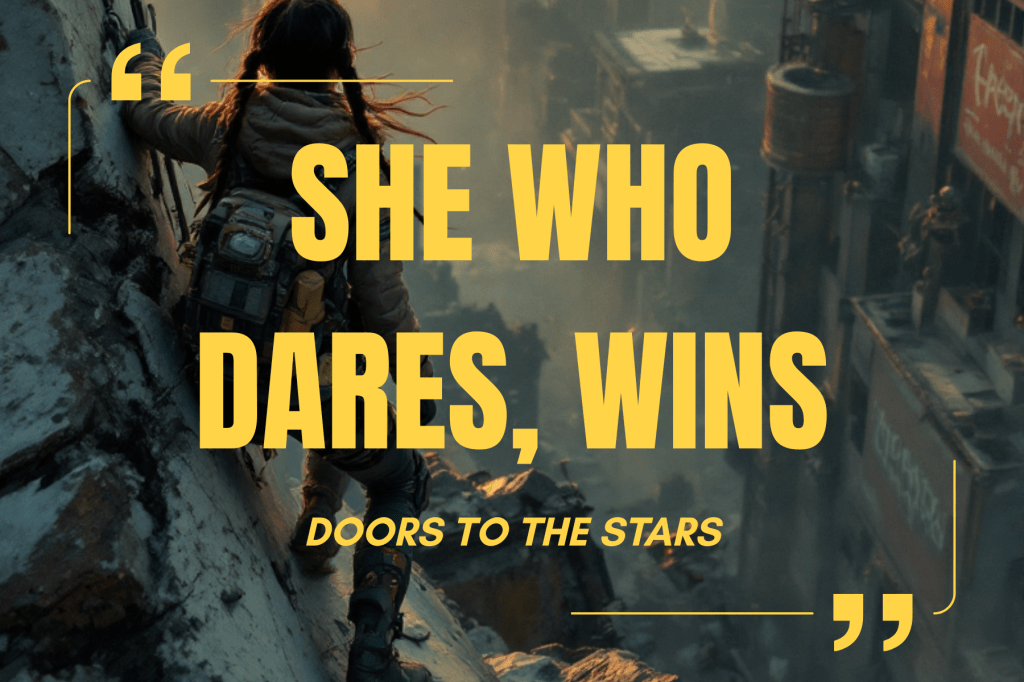
Here’s what they rejected: A 16-year-old radiation-poisoned scavenger named Wulan who discovers ancient alien technology that could reconnect a fractured galaxy. She faces impossible moral choices, carries genuine guilt for the thousands who die because of her mistakes, and must decide whether to sacrifice her humanity to save billions. There’s a developing relationship, sure, but it’s not the focus. The story is about responsibility, trauma, atonement, and the cost of power.
It’s exactly the kind of book I would have devoured as a teenager.
It’s exactly the kind of book my 11-year-old daughter did devour—staying up all night to finish it, then immediately asking when book two would be ready. My 19-year-old son loved it too, texting me at 2 AM about plot twists he didn’t see coming.
But according to the traditional publishing industry? No market for it.
That’s when I realized: they’re not wrong about the market they’re serving. They’re just serving the wrong market.
Teens, once the focus of what we call YA literature, were no longer the target audience. Main characters started to consistently be around the age of 17.
Karen Jensen, Teen Services Librarian with 32 years experience
Young Adult literature nearly died in the mid-1990s. Publishers feared extinction as the “problem novel” format had exhausted itself, leaving mostly formulaic series books. Between 1990-2000, only about 3,000 YA titles were published annually.
Then came the resurrection. Harry Potter‘s 1998 US release restructured children’s publishing infrastructure. The establishment of the Michael L. Printz Award in 2000 legitimized YA as literature deserving critical respect. The first winner? Monsterby Walter Dean Myers—featuring a 16-year-old Black teen on trial for felony murder, with brutal prison conditions and profound moral ambiguity about his guilt.
The 2000s brought explosive growth: from 3,000 to 30,000 titles annually by 2010. Twilight (2005) launched paranormal romance. The Hunger Games(2008) proved YA could tackle political themes with literary sophistication. Film adaptations demonstrated Hollywood’s appetite for YA properties.
But these successes contained the seeds of transformation. Publishers noticed that adults, not teens, were buying these books in significant numbers.
55% of YA book buyers were adults aged 18 and over… 78% of adult buyers purchased YA books for themselves.
2012 Bowker Market Research Study
This wasn’t adults buying gifts. This was adults reading YA as their primary fiction.
Publishers responded rationally to the data. When 55% of buyers are adults with disposable income, why optimize for the 45% teen market with less purchasing power? The shift to expensive hardcover releases, books requiring series commitments, and marketing that prioritized adult romance readers made economic sense—but abandoned the genre’s original purpose.
By 2024, these demographics remained stable: 55-70% of YA readers are adults.
The “crossover” isn’t temporary—it’s a permanent restructuring. And what happened next reveals everything wrong with modern publishing.
The romantasy market alone generated $610 million in 2024—a 40% year-over-year growth.
Publishers Weekly
Romance has conquered YA. In 2024, seven of the top 10 bestselling books across all categories were romance or romantasy titles.
Among 615 YA books published in 2023, fantasy and romance each comprised 30% of releases—60% combined.
Here’s where it gets weird.
Books have become more sexually explicit while simultaneously avoiding the moral complexity, difficult themes, and real consequences that once characterized groundbreaking YA literature. Publishers will accept graphic sex scenes but reject manuscripts about police brutality as “too dark.”
When Sarah J. Maas’s A Court of Thorns and Roses launched in 2015 with explicit sex scenes but was still marketed as YA, publishers proved they’ll accept anything that sells—except books about real teenage experiences that don’t center romance.
Let me show you what classic YA tackled unflinchingly:
The Outsiders (1967): gang violence, class conflict, teenage murder. Speak (1999): rape and trauma recovery. Monster (1999): systemic racism in criminal justice, uncertain guilt. The Absolutely True Diary of a Part-Time Indian (2007): addiction, poverty, death on reservations—with profanity and humor that served the story. The Hunger Games (2008): children forced to kill each other on live television, PTSD, war trauma, the psychology of desensitization to violence.
And then there’s The Hate U Give (2017).
There are 89 f-words in The Hate U Give… And last year, more than 900 people were killed by police. People should care more about that number.
Angie Thomas
These books trusted teenagers with moral ambiguity, real consequences, systemic critique, and difficult questions without easy answers. They featured realistic language, including profanity when appropriate to character and situation. They showed violence with lasting trauma, not just thrilling action sequences.
Current market trends reveal publishers will accept four-star “spicy” romance with detailed sex scenes but express concern that books about gun violence or racism are inappropriate for teens.
Think about that for a minute.
Only 32.7% of children aged 8-18 said they enjoyed reading in their free time—the lowest rate in 20 years.
2025 National Literacy Trust survey of 114,970 children
But here’s the kicker: these teens still read song lyrics, news articles, fiction, comics, and fan fiction. They’re not illiterate.
They’re underserved.
When asked what would motivate them to read more, teens cited material related to favorite films or TV series (38.1%), content matched to their interests (37.1%), freedom to choose what they read (26.6%), and interesting covers or titles (30.9%).
A Scottish Book Trust study of 45 teenagers aged 13-14 identified why teens aren’t reading current YA: books don’t match their interests or age, school reading assignments feel like work not pleasure, they’re given no choice in what to read, available books are either too challenging or too juvenile, and reading is portrayed as antisocial and uncool.
The complaint from actual teenagers: YA books try too hard to use current slang that feels inauthentic and is outdated by publication, characters act like college students rather than teens (smoking, road trips, rarely relying on family), and books miss key aspects of actual teenage experience.
Today, most YA books feature a teen character that is aged 17 and often acts with an emotional and intellectual maturity far greater than your typical 17 year old. Books with main characters aged 13 to 16 are hard to find.
Karen Jensen
American teen readership has shifted massively from American YA to Japanese manga. The manga market in the US reached $1.28 billion in 2025, projected to grow to $3.73 billion by 2039—a 24% compound annual growth rate.
Between 2020-2021 alone, manga sales grew 160%, from 9 million to 24.4 million units.bBy 2022, manga comprised 76.71% of all Adult Fiction graphic novel sales.
School librarians report manga “flying off the shelves” faster than they can restock, with students “literally pull[ing] open my return bin to climb in to get manga when they see their classmates return it.”
What does manga offer that American YA doesn’t?
Age-appropriate protagonists facing real stakes with lasting consequences. Moral complexity explored through characters like those in Chainsaw Man, who grapple with utilitarianism and moral relativism without easy answers. Authentic coming-of-age narratives where characters grow measurably over hundreds of chapters, forced to mature due to circumstances. Difficult themes American YA increasingly avoids: depression and suicide, sexual identity and assault, systemic corruption, the psychological impact of violence, existential questions about purpose and meaning.
A University of Mississippi analysis found manga offers “gritty themes: Anime was unafraid to discuss sexuality and mental health long before American TV shows.” Teens report that manga “treats teens as mature viewers” and addresses “romantic attraction, teen relationships, depression, and the despair that can come when things don’t work out” without condescension.
The manga boom reveals teen hunger for precisely what American YA increasingly fails to provide: stories that trust readers with complexity, challenge them with difficult questions, and reflect their authentic experiences without sanitization.
Translation: American teenagers are voting with their wallets. They’re saying “we want substance, not just vibes.” And traditional YA publishing isn’t listening.

Enter Doors to the Stars
When I set out to write a short story for my daughters, I ended up creating an epic YA space opera that directly answers every gap the research identified.
Age-Appropriate Protagonist: Wulan is 16—not the standard 17-year-old who acts like a college student. She’s a radiation-poisoned scavenger whose brother died from sepsis at six, sleeping beside an open sewer. Her friend Cassandra died because Wulan couldn’t find antibiotics in time.
She carries this:
“Everything I touch turns to ash.”
That’s not melodrama. That’s her reality. Her brother Arjuna, dead. Cassandra, dead. Her best friend Ryn, shot through the chest in the opening act. And then the Veyra’s Haven disaster—when Wulan accidentally causes a catastrophe that kills thousands, including children who reminded her of Cassandra.
“I told her to keep breathing, Jace, and then I stole her air.”
The book doesn’t give her easy absolution. She contemplates suicide. She wrestles with whether atonement is even possible. As her mentor Jace tells her:
“I see two paths before you, Wulan: self-destruction or self-correction.”
Moral Complexity Without Sanitization: There’s no graphic sexual content in Doors to the Stars, but the book doesn’t shy from real consequences, realistic language when appropriate, and difficult questions about responsibility and power.
When Jace—a reformed Ascendancy war machine—shares his own path to redemption, he explains how guilt works:
“Guilt is a fascinating emotion most biologics possess. It is a signal that one has strayed from one’s path and must self-correct. But it is only a signal. To be consumed by guilt is to subvert its purpose. It is only useful so long as it leads to atonement, and then it must be abandoned.”
But Wulan pushes back: “The deaths of my brother and other people I was responsible for like Cassandra are my fault. I failed them. I didn’t try hard enough… I’m a genocidal terrorist with the innocent blood of thousands on my hands. How do I possibly atone for all that?”
That’s the level of psychological realism we’re talking about. A sixteen-year-old wrestling with survivor’s guilt, moral injury, and the weight of impossible choices. Not because it’s edgy or dark for its own sake, but because these are the questions teenagers actually grapple with when they experience trauma, loss, and responsibility.
Intelligence-Driven Plot: Wulan doesn’t save the galaxy through destiny or inherent specialness. When told the artifact “chose” her, Jace corrects her understanding:
“There is no destiny. Only choice. If it were destiny it would not be a path to atonement.”
She must negotiate with traumatized alien intelligences, heal ancient AI minds scarred by war, and learn Aikido philosophy to find “the middle path” between extremes. Dr. Xanith warns her:
“The gates are scarred by The War… a misstep could unravel more than you mend. It will take a gentle and firm hand.”
When Wulan finally enters the relay to activate the gate network, she faces a psychic assault from thousands of traumatized alien minds demanding control. The disk offers her a way out: emotional numbness, freedom from guilt and fear. But Jace’s warning echoes:
“Peace lies between extremes. Walk the middle path.”
This isn’t a chosen-one narrative where special powers solve everything. It’s a story about a scared kid learning to negotiate with forces beyond her comprehension while carrying the weight of her failures—and choosing to keep trying anyway.
Real Stakes: Deaths aren’t decoration. When Ryn dies from that blaster shot in the opening act, it haunts Wulan throughout the book. Violence has psychological costs. Jace sought to “terminate his runtime” due to overwhelming guilt over the lives he took during his service as an Ascendancy weapon.
The Veyra’s Haven disaster—where thousands die, including the Vylaraian children—isn’t plot mechanics. It’s moral injury:
“I can’t get the images of the twisted, oxygen-starved bodies out of my head, no matter how hard I screw my eyes shut.”
Found Family Over Romance: While there’s a developing relationship with Marc, the core is found family aboard The Gambler—a ragtag crew led by Captain Toren, with Mira as the ship’s heart, Marc as the scrappy engineer, and Jace as the philosophical warrior who becomes Wulan’s mentor. They become the home she never had.
The Questions That Matter:
The book asks what teenagers are actually wrestling with:
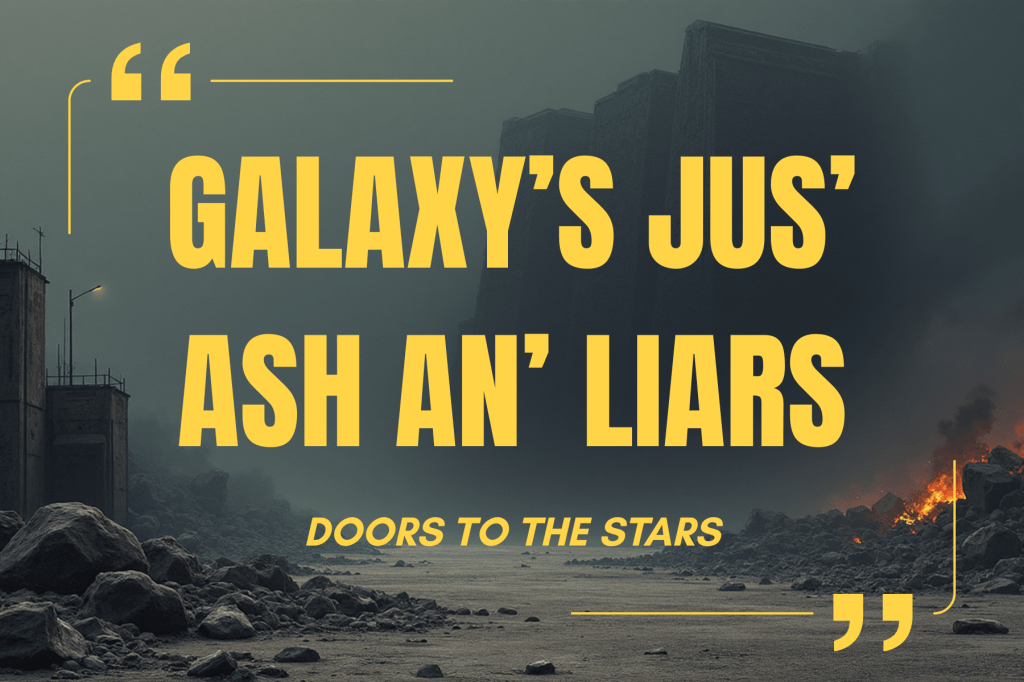
- “What do you owe a galaxy that’s just ash and liars?”
- “When is sacrifice heroism, and when is it just another system consuming kids?”
- “Everything I touch turns to ash—how do I possibly atone?”
- “Would I even still be myself?” (when considering permanent fusion with alien technology)
These aren’t abstract philosophical questions. They’re the questions Wulan asks herself every day as she tries to figure out if she can live with what she’s done, whether survival is the same as living, and if she has the right to make choices that affect billions when she’s failed everyone she’s personally loved.
My 11-year-old daughter devoured it and loved it, despite the book being targeted at 14+. She asked when book two would be ready. She wanted to know if Wulan would be okay. She understood every choice, every consequence, every moment of doubt.
My 19-year-old son found it compelling enough to text me at 2 AM about plot twists. He said the moral complexity reminded him of The Expanse—high praise from someone who reads both manga and adult SFF voraciously.
Beta readers from ages 13 to 40+ have responded with enthusiasm. The ones who love it most are the ones who remember what YA used to be—or who are actively seeking stories that trust them with weight.
But traditional publishing rejected it without even reading the full manuscript.
Why?
Because the industry has optimized for adult women aged 30-44 who want romantic escapism, not for actual teenagers who want stories that trust their intelligence and reflect their experiences.
The sanitization paradox reveals the hypocrisy: publishers will market four-star “spicy” romance to teenagers (detailed sex scenes, graphic content, mature themes) but reject books about systemic injustice, moral ambiguity, or the psychological cost of violence as “too dark” or “not commercial enough.”
They’ll publish books where teenagers have graphic sex but express concern about realistic depictions of teenage substance use, mental health crises, or encounters with police violence.
They’ll accept chosen-one narratives where special teenagers save the world through destiny, but reject stories where flawed teenagers make difficult choices under impossible pressure—stories that actually reflect what being sixteen feels like when the world doesn’t offer clean answers.
“YA used to be for young adults, not adult romance readers looking for two-star spice instead of five. The genre used to be morally complex, dealing with real teen issues. Remember Code Name Verity, The Book Thief, Speak, Monster, and The Absolutely True Diary of a Part-Time Indian?”
That’s from my call for advance readers. Because here’s the truth: agents and publishers today want safer, simpler, more commercially palatable stories.
That’s not what I write. That’s not what actual teenagers want. That’s not what real YA fiction is—or ever was.
The genre has been sanitized for an entirely different market. Stolen from the young adults it was meant to serve.
So I decided to steal it back.
Doors to the Stars launches February 24, 2026, as an indie publication. It’s for teens who are tired of being underestimated, who want books that challenge instead of protect, who know the difference between gratuitous edge and earned weight.
It’s for parents and educators who remember what YA used to mean and want to give young readers something with substance.
It’s for anyone who believes teenagers deserve stories that trust them with complexity, treat them like they’re smart enough to get it, and reflect the weight they already carry.
The research proves the demand exists. Manga sales prove teenagers will read voraciously when they find content that speaks to them. The migration away from American YA isn’t because teenagers don’t like reading—it’s because American YA stopped serving them.
The teens are still out there, reading voraciously when they find material that speaks to them… They’re not asking for simple stories or protection from difficulty. They’re asking for recognition, trust, and books that feel ‘truly meant for them.
National Literacy Trust, February 2025.
Traditional publishing said there’s no market for this book.
I’m betting they’re wrong.
About the Author: Ryan Williamson is a military veteran and author of literary science fiction and fantasy. He lives with his wife and children, writes stories that trust readers with complexity, and believes Young Adult fiction should actually be for young adults. Doors to the Stars is his reclamation of a genre that forgot who it was supposed to serve.
Join the advance reader team and help launch a book traditional publishing rejected.
Works cited
Jensen, Karen. “Sunday Reflections: Teens Today, Anxious and Angry at a World that Tells Them They Don’t Matter.” Teen Librarian Toolbox, July 13, 2025.
Cart, Michael. “Young Adult Literature: From Romance to Realism.” American Library Association, 2016.
“Michael L. Printz Award.” Young Adult Library Services Association, 2000.
Bowker Market Research. “New Study: 55% of YA Books Bought by Adults.” Publishers Weekly, September 13, 2012.
“Young Adult Books Attract Growing Numbers of Adult Fans.” BookSeller, March 2024.
NPD BookScan. “Romance and Romantasy Drive Book Sales in 2024.” Publishers Weekly, January 2025.
Analysis of Publishers Marketplace deals and Publisher’s Weekly announcements, 2023.
Thomas, Angie. Author appearance at Cleveland Public Library, February 2018. As reported by Anisfield-Wolf Book Awards.
“Children and Young People’s Reading in 2025.” National Literacy Trust, February 2025.
Neale, Alice. “Reading for Pleasure Among Teenagers.” Scottish Book Trust, March 2023.
Jensen, Karen. “New Reports Show a Decline in YA Book Sales.” Teen Librarian Toolbox, March 20, 2023.
“Manga Market Analysis and Forecast 2025-2039.” Grand View Research, 2025.
Multiple reports from school librarians on r/YAlit and Teen Librarian Toolbox, 2023-2024.
Roberts, Samuel. “Why American Teens Are Reading Japanese Manga Instead of YA.” University of Mississippi Media Studies, 2024.
Discover more from Beyond the Margins
Subscribe to get the latest posts sent to your email.

 Beyond the Margins
2 thoughts on “Modern YA Is Failing Teenagers—I’m Stealing it Back”