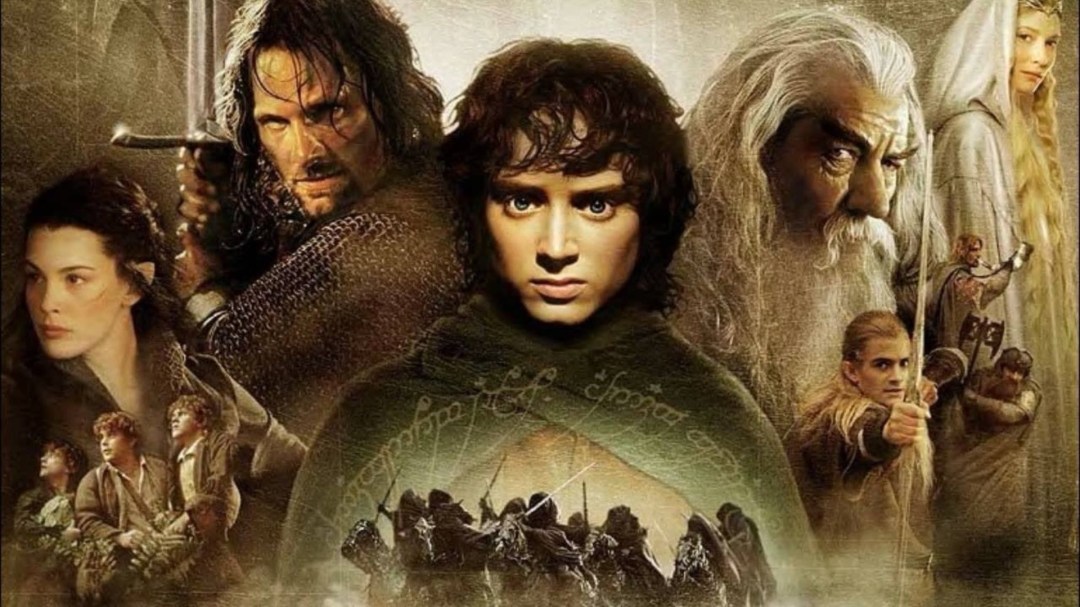
After writing my essay on whether Game of Thrones is nihilistic or hard-won humanism, I realized something interesting…
The debate isn’t really about Martin’s work at all.
It’s actually about how Reformed apologetics has appropriated Tolkien—flattening his Catholic sacramental theology into moral triumphalism—and that appropriation is so thorough that even Martin’s most sophisticated criticisms argue against the appropriation rather than the actual author.
Reformed readers claim Tolkien as their champion of moral clarity. They read The Lord of the Rings as proof the universe bends toward justice. Righteousness wins. Good and evil are clearly distinct. Eucatastrophe—Tolkien’s term for the sudden happy turn—becomes evidence that moral order reasserts itself. Difficult choices have right answers. Virtue gets rewarded. This creates their framework:
Tolkien equals moral clarity, Martin equals nihilistic chaos.
Of course not every Reformed reader does this, but popular Reformed apologetics has created a framework that shapes how both defenders and critics read Tolkien. It’s a framework that erases who Tolkien actually was, and it blinds us to what both authors were actually doing.
I have seen three ages in the West of the world, and many defeats, and many fruitless victories.
Elrond
Tolkien was a WWI combat veteran who fought at the Somme and lost most of his closest friends. He was Catholic, working from a tradition that acknowledges tragic moral dilemmas. His letters reveal deep awareness of moral complexity, the limits of human virtue, and the reality of permanent moral injury. He wasn’t writing “good triumphs cleanly.” He was writing “grace can redeem even our failures, but the wounds remain.”
“I am a Christian, and indeed a Roman Catholic, so that I do not expect ‘history’ to be anything but a ‘long defeat’—though it contains (and in legend may contain more clearly and movingly) some samples or glimpses of final victory.”
Long defeat with glimpses of final victory.
That’s eucatastrophe. Not as proof righteousness wins, but as grace breaking through despite our failures. For Tolkien, eucatastrophe is grace—unearned, surprising, a gift that breaks through despite human failure. It’s profoundly sacramental. Divine intervention that doesn’t erase failure but redeems it.
Frodo doesn’t win at Mount Doom. He fails.
He claims the Ring for himself. The quest succeeds not because his virtue held firm but because Gollum intervenes. That’s grace operating despite failure, not reward for righteousness. The victory is real. But so is the cost. Frodo’s permanently wounded and can’t stay in the Shire. Middle-earth has no healing for what the Ring did to him, so he sails to the Undying Lands—effectively dying to the world he saved. The Scouring of the Shire happens. Evil doesn’t just disappear when the Dark Lord falls. Sam, Merry, and Pippin carry what they’ve seen and done for the rest of their lives.
Reformed readers flatten this. They read the ending as “good guys won because they were good,” and miss that Tolkien wrote “grace saved them despite their failures.” The wounds and ambiguities get compressed into “hard but worth it,” and eucatastrophe becomes moral order reasserting itself rather than grace breaking through.
Pity? It was pity that stayed Bilbo’s hand. Many that live deserve death. Some that die deserve life. Can you give it to them, Frodo?
Gandalf
George R.R. Martin famously criticized what he saw as Tolkien’s moral simplicity. He wanted to challenge what he saw as naïve moral order—the idea that “if the king was a good man, the land would prosper.”
The irony of course is Tolkien already addressed this. The Scouring of the Shire shows the land doesn’t automatically prosper when the king returns. Frodo can’t stay in the place he saved. The wounds don’t heal. Tolkien wasn’t writing “good king makes land prosper”—he was writing “even when grace intervenes, the cost is permanent,” and Martin’s criticism reveals he read the appropriated version of Tolkien—the one Reformed readers champion—not the actual Catholic combat veteran who understood moral injury.
Interestingly, Martin is Catholic himself, although he describes himself as agnostic or atheist.
“I find religion and spirituality fascinating. I would like to believe this isn’t the end and there’s something more, but I can’t convince the rational part of me that makes any sense whatsoever.”
He consciously rejects Tolkien’s metaphysics. No divine intervention. No grace. No eucatastrophe.
But I believe Martin’s still working from Catholic moral theology’s analytical framework, as ironic as that might sound. I believe he inherited the intellectual apparatus for understanding tragic moral dilemmas—the structure Catholics developed for analyzing situations where the universe doesn’t offer clean answers. The categories. The tools. The recognition that sometimes both options are objectively wrong and you still have to choose and you bear real moral responsibility. He just stripped out the grace while keeping the framework that says moral injury is real and permanent and the understanding that tragic dilemmas are genuinely irreducible. He keeps the analysis of what it costs to choose when creation itself is broken, but he removes eucatastrophe. No divine intervention. No redemption. Just the weight you carry.
Martin believes he’s correcting Tolkien’s naïve moral order when he’s actually just removing the eucatastrophe from a framework Tolkien already built to handle tragedy and permanent moral injury. (Or is he? I’ll come back to that.)
The reality is both autbors are closer to each other than Martin—or most anyone else for that matter—realizes.
They tend to forget that strange element in the World that we call Pity or Mercy, which is also an absolute requirement in moral judgement (since it is present in the Divine nature).
J.R.R. Tolkien
I’ve been accused of moral relativism when I write about tragic dilemmas in my novels, but that’s not what I’m doing at all. I’m working from the same Catholic theological tradition Tolkien worked from—the same one Martin inherited the structure of, even if he thinks he rejected the metaphysics.
Traditional Catholic ethics uses the principle of double effect to navigate hard choices. You can choose an action with both good and bad effects if the act itself isn’t intrinsically evil. You intend the good while merely foreseeing the bad, and there’s proportionate reason. That framework works for many difficult situations. In The Lord of the Rings, sending Frodo to almost-certain death to destroy the Ring fits this framework. You’re intending to save Middle-earth while foreseeing but not intending Frodo’s likely death.
But the principle of double effect breaks down when you face genuine tragic moral conflicts. Situations where both available choices involve doing something objectively wrong, not just accepting foreseen side effects. Where you’re not avoiding evil but choosing which form of it to enact. Catholic moral theology—particularly post-Vatican II thinkers like Josef Fuchs and Richard McCormick—acknowledges these situations exist. You didn’t create the dilemma. You’re not fully culpable for the situation existing. But you must still choose and act. And you bear real moral responsibility for that choice even though the situation itself was unjust.
The key insight is the moral injury is real and permanent, and the guilt doesn’t disappear just because the choice was forced on you.
Frodo indeed ‘failed’ as a hero, as conceived by simple minds: he did not endure to the end.
J.R.R. Tolkien
In my YA novel Doors to the Stars, The Gambler’s pilot Mira, who becomes the protagonist Wulan’s surrogate mother figure, faces an impossible choice…
Warning: Major spoilers inside. Click to expand.
In a secret encrypted transmission the Ascendancy threatens to kill Mira’s biological daughter Vamika and Mira’s estranged wife Haniya—Vamika’s other mother—if she doesn’t betray the crew, Wulan specificially. They tell her they’ll nail her loved ones to the scaffold, and so Mira plots a course straight into a trap, knowingly leading Wulan and everyone else to their certain deaths—or worse.
In her recorded confession—left hidden in her navigation files as insurance against a miracle—Mira tells Wulan, “I love you, Moon-Girl, but Vamika is my little girl. I carried her, felt her life growing inside me, and that’s a bond you can never appreciate until you experience it yourself… I know I’m not going to survive this—they’ll kill me, and all of you, just for some old Forger trinket and to satisfy the Ascendancy’s twisted vengeance.”
Mira knows the Ascendancy probably won’t keep their word—she makes her choice knowing her family might die anyway. But when your daughter’s headed for the scaffold, you can’t bet on the torturer bluffing. The possibility that compliance might save them is motivation enough for betrayal.
This isn’t a case where one option has merely “foreseen” bad effects. Both choices involve directly causing death. Save your biological daughter and her other mother—people you carried, raised, still love despite the failed marriage—by betraying your found family to certain death. Or protect your crew—the girl who’s become like a daughter to you, the people who’ve become family—and watch your biological daughter and her mother be tortured to death on a scaffold.
There’s no clever theological footwork that makes one of these “right” in any meaningful sense because you’re not choosing between good and evil. You’re choosing which mass casualty event you can live with. Perfect knowledge wouldn’t help. More information doesn’t reveal a hidden “right” answer.
The universe simply doesn’t offer a moral high ground.
Captain Toren’s response is to “space her.” No hesitation. Betrayal is betrayal, extenuating circumstances or not—but Wulan’s counters: “She had an awful decision to make, and I can see why she chose her real daughter over me. It was the logical choice. I don’t know if I can forgive her, but I can let it go.”
So she invokes scav rules—the victim of betrayal gets to choose the punishment. And she chooses exile over execution. “Put her on an escape pod and let Saint Kiva choose her fate… I never want to see her again.”
Mira’s jettisoned, her fate left to chance or divine will or whatever finds her, and her relationship with Wulan is destroyed forever. But Wulan won’t cross the line into execution.
We never find out if Vamika and Haniya are actually rescued. Never know if Mira’s choice “worked.” The moral weight stays permanent, the questions unanswered, and the scars remain.
This is what Frodo carries. Even though grace intervened, he’s destroyed by what the Ring made him do and become. This is what Martin’s characters carry. They live with what necessity demanded.
Lloyd Alexander wasn’t attempting to exorcise his demons when he wrote the Westmark trilogy. He cherished those demons, because he believed they were his conscience. The weight you carry for having been forced to choose between forms of wrong—that’s your conscience.
That’s what keeps you human.
That isn’t moral relativism. It’s acknowledging that sometimes creation itself is broken in ways that don’t permit clean resolutions. Sometimes you’re genuinely choosing between competing goods that can’t both be preserved, or between wrongs where neither option avoids real moral harm. The person who thinks there’s always a metaphysically correct answer—even if unknowable—likely hasn’t grappled with situations where perfect knowledge wouldn’t help, where more information doesn’t reveal a hidden “right” choice.
Together through ages of the world we have fought the long defeat.
Galadriel
Reformed theology—especially popular apologetics—needs moral order to be clear and consistent. Righteousness must be rewarded, eventually. Evil must be punished. The universe must bend toward justice as proof of divine sovereignty.
They can’t handle Frodo’s failure being redeemed by grace rather than by his virtue holding firm. Can’t handle tragic dilemmas being genuinely irreducible. There must always be a “right” answer, even if unknowable. Can’t handle Martin’s world where sometimes there’s no redemption at all—just living with what you’ve done. The appropriated version of Tolkien has trained them to expect eucatastrophe equals moral order reasserting itself. When Martin doesn’t provide that, they conclude he has nothing true to say about the human condition. But what they’re actually rejecting is the Catholic framework both authors work from: sometimes you face situations where both options are objectively wrong.
Not just difficult. Not just costly.
Wrong.
And you still have to choose.
Reformed readers think they’re defending Tolkien’s moral clarity against Martin’s nihilism when in fact they’re defending a flattened, appropriated version of Tolkien that the Professor himself wouldn’t recognize. The real Tolkien—Catholic, combat veteran, believer in grace operating despite human failure—would understand exactly what Martin’s doing, because both are writing about men who’ve seen what war does to moral certainty. Both understand that sometimes you choose between forms of wrong. Both know that the weight doesn’t go away.
Tolkien offers hope through grace; Martin, perhaps, offers no such consolation. But neither offers the clear moral order and righteous victory that Reformed appropriation demands.
Even the very wise cannot see all ends.
Gandalf
The conversation about Martin’s “nihilism” isn’t about nihilism versus moral clarity, and it certainly isn’t about entertainment versus profundity. Nor even pessimism versus hope. It’s about whether grace intervenes in tragic moral dilemmas.
Tolkien says, yes, through eucatastrophe, though the wounds remain. Martin argues, no, you live with what you’ve chosen. Reformed readers, working from moral realism with providential order misread both and insist tragic dilemmas must have right answers because God’s moral order is perfect.
Their appropriation is so complete that Martin himself argues against it.
He thinks he’s correcting Tolkien’s naïve moral triumphalism when Tolkien never wrote that. Martin inherited Catholic moral theology’s tools for analyzing tragedy, stripped out the metaphysics of grace, and thinks he’s doing something Tolkien didn’t do. Reformed readers defend a Tolkien who never existed against a Martin they fundamentally misread. The beautiful irony is both authors work from Catholic tragic moral theology, knowingly or not. One just doesn’t happen to believe in grace anymore—or so he tells himself.
But I’m not convinced.
Because I’ve seen grace at work in Westeros.
Discover more from Beyond the Margins
Subscribe to get the latest posts sent to your email.

 Beyond the Margins
Dammit, Williamson. It’s gonna be like The Screwtape Letters all over again for me, isn’t it? Now I have to go read these DNF-a-dozen-times books for reasons other than entertainment and then I’m going to be up in the middle of the night thinking hard.
Well, I’m not gonna this weekend.
This weekend, I’m continuing on my plans to read the new manuscript that showed up in my inbox. Probably will still be up in the middle of the night, though.
Next weekend, I can read Tolkien with your words in my head.
LikeLiked by 1 person
Bwahahaha!
LikeLiked by 1 person