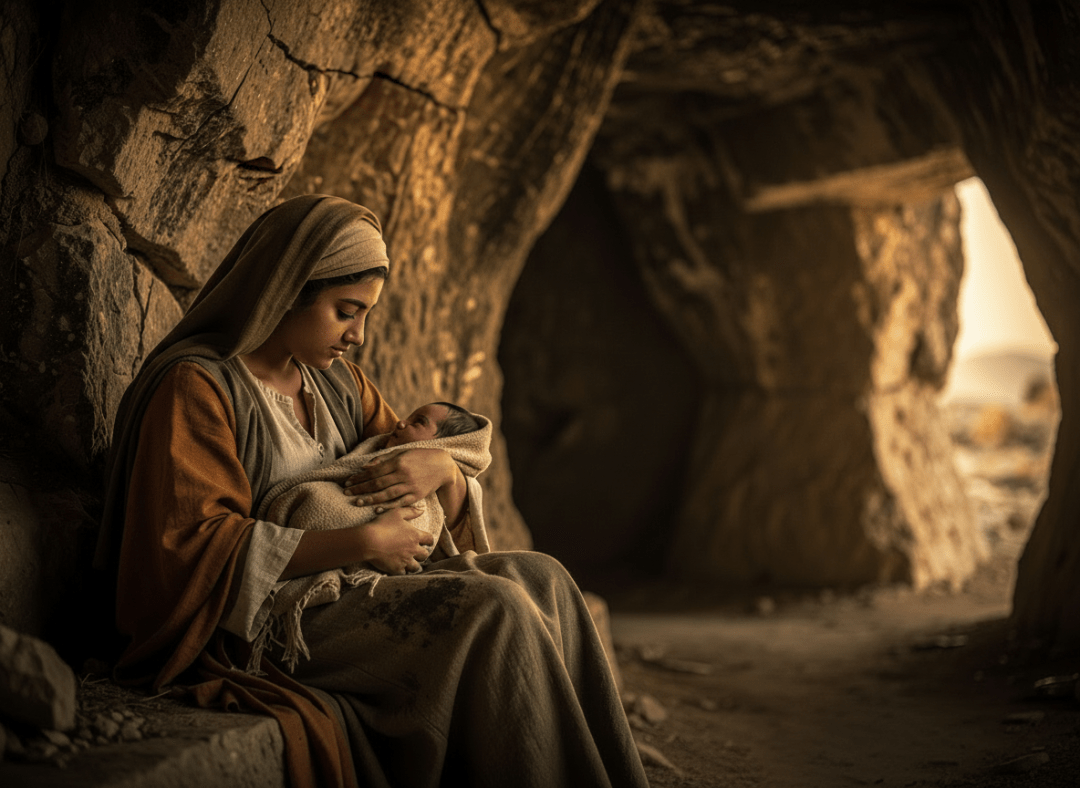
My fourth great-grandfather, Virginia native William J. Bennett, received his Nauvoo initiatory ordinance as a High Priest in the Church of Jesus Christ of Latter Day Saints in 1846—the same year he died from exposure during the Mormon persecutions and exodus. His widow crossed the plains to Utah in 1851 with several of their children, including their tenth son and my third great-grandfather, John Bell Bennett, who met his wife Mary Elizabeth Senior, an English immigrant convert, on the trail (when he mistook her answering a call of nature for a bear in the brush and almost shot her).
He was twenty-one.
Seven generations later, when I was twenty-nine, nearly a decade after having served a full-time mission in the Navajo Nation, I left the LDS Church.
Between 1995 and 1997, I spent two years teaching the gospel to Navajo families. I bore testimony. I baptized converts. I laid hands on the sick and gave blessing of healing and comfort. I witnessed miracles. I didn’t just believe—I knew. When you serve a mission, you don’t hold your faith lightly. You commit two years of your life to share what you know is true with strangers.
So leaving wasn’t casual doubt or spiritual drift. It was confronting that I’d been wrong about foundational claims, and that I’d spent two years teaching others things I could no longer defend.
My exodus began when debating my then-father-in-law. He believes in conspiracy theories, quantum holograms, crystals, Transcendental Meditation—everything from ancient aliens to meditation as enlightenment technology. When he challenged my beliefs, I gave him the same answers I’d been giving investigators for years. The responses that had baptized dozens of families on the Navajo Nation. But this time, something was different. The answers didn’t satisfy me. I wasn’t defending my faith to him anymore. I was defending it to myself.
I started researching. Evolution, geology, archaeology, history, linguistics, genetics. The more I dug, the more the foundational claims didn’t hold. Not because I wanted them to fail—because the evidence didn’t support them.
By 2005, I couldn’t ignore what I’d found. Over a hundred and fifty years and seven generations of Mormon identity, mission service, community, family legacy and pride—none of it mattered more than following truth. My fourth great-grandfather died fleeing persecution for this faith. I walked away from what he died for because I couldn’t pretend to believe something the evidence contradicted.
I became an atheist. What I termed an “Apathetic Agnostic.” Not angry or reactionary—just convinced there was nothing transcendent. The universe was matter and energy operating according to physical laws until entropy wins. No gods watching, no souls persisting, no meaning except what we construct before we stop existing.
It was anything but comfortable.
For seven years, I lived with that framework. I continued to research. Philosophy, theology, history. I read the arguments for and against Christianity, for and against theism generally. Comparative religion is one of my favorite topics of study. I wasn’t looking to believe again. I was looking for intellectual honesty wherever it led.
But by 2012, something had shifted. I couldn’t bear another secular Christmas. The holiday felt hollow—going through motions that pointed to nothing beyond themselves. Presents under a tree, carols about joy and peace, family gatherings celebrating… what, exactly? The winter solstice? Consumer spending patterns?
It was empty. Soulless.
I didn’t believe the Nativity story was true. But I gave myself permission to hope it might be. I told myself it was okay to hope that Mary’s son was more than just a helpless low-born infant in a manger.
Not because I had new evidence. Because the claim itself arrested me—that transcendence entered vulnerability, that ultimate power chose weakness, that Love incarnated as entity rather than remaining abstract principle, choosing to share human suffering rather than observe it from distance. If that’s true, it changes everything. If the fundamental Christian claim is accurate—that meaning isn’t something we construct but something we discover, that reality itself is Love and Love chose to become human—then the universe operates according to principles I wanted to believe in.
And I wanted to live in that universe.
But I knew hope without intellectual rigor would just be wishful thinking. I’d already proven I couldn’t maintain beliefs that didn’t withstand scrutiny. Any faith I adopted would have to meet the same standard that made me leave Mormonism.
So I spent the next seven years studying. Philosophy—Augustine, Aquinas, Pascal, Newman. Church fathers—Irenaeus, Athanasius, Chrysostom. Historical claims about Jesus, the resurrection, the early church. Apologetics from both Catholics and their critics. Theology, liturgy, sacramental practice.
I investigated Protestant traditions too. And Eastern Orthodoxy, very deeply. I love the beauty of Orthodox theology more than words can express. I became convinced that apostolic succession mattered. If Christianity’s claims are true—if Christ actually established a church and promised the gates of hell wouldn’t prevail against it—then there should be institutional continuity from the apostles.
That narrowed the field to Orthodoxy or Catholicism. Both claim apostolic succession. Both preserve sacramental theology. Both have intellectual traditions sophisticated enough to engage with science, history, and philosophy without collapsing when discoveries complicate simple narratives.
A Catholic priest who was patient with my questions suggested that the church Christ founded would be recognizable by its ability to adapt to every culture while maintaining unity—universal in expression, singular in identity.
Catholic literally means universal. The Orthodox churches are apostolic but fragmented by nationality and autocephaly. Rome has maintained institutional unity across cultures for two thousand years despite everything trying to fracture it. That unity—messy, imperfect, often failing in its human leaders but persistent in its institutional claim—seemed like exactly what you’d expect if the promise was real.
I spent a long time speaking with priests and scholars from both traditions. I discovered the theological elements I loved about Orthodoxy were compatible with Roman Catholicism—and the points they disagree on didn’t matter to me nearly as much.
I never wanted to become Roman Catholic. The Church’s history is a disaster—Crusades and Inquisitions, sexual abuse scandals covered up for decades, corruption at every level, political compromise with whatever power structure offered protection. Saints and martyrs and relics and apparitions. Transubstantiation.
But two passages kept replaying in my mind. For years.
First John 6:68: “Simon Peter answered him, ‘Master, to whom shall we go? You have the words of eternal life.'”
Then Acts 2:37-38: “Now when they heard this, they were cut to the heart, and they asked Peter and the other apostles, ‘What are we to do, my brothers?’ Peter said to them, ‘Repent and be baptized, every one of you, in the name of Jesus Christ for the forgiveness of your sins; and you will receive the gift of the Holy Spirit.'”
If Christianity is true, and apostolic succession matters, then the institution’s human failures don’t negate its claim to stewardship. You can’t shop for a perfect church, because humans run all of them. The question isn’t “has this institution been flawless?” The question is “is this the institution Christ founded?” If yes, then Peter’s response applies: to whom else would I go?
To whom else could I go?
I was baptized Catholic during Easter Vigil, 2019. Fourteen years after leaving Mormonism. Seven years after giving myself permission to hope. Not rushed, not an emotional rebound—chosen with eyes wide open after applying the same intellectual rigor that made me leave.
I adopted Francis of Assisi as my patron, or rather, he adopted me. (I’ll admit I wanted a cooler saint, but we don’t have much choice in the matter of our spiritual mentors. Turns out I needed him.)
So what do I believe?
I believe in Christianity because that’s the universe I hope is true. Not because I can prove it—I can’t. Maybe there’s nothing transcendent. Maybe the universe is just chaos and entropy, atoms arranging themselves into temporary patterns of complexity before dispersing into heat death. I don’t know.
But I’d rather have hope than certainty in meaninglessness.
I hope there’s a higher power. I hope that power is Love as entity, not abstraction. I hope Love became human to share our suffering. I hope the Nativity story is true—that ultimate reality entered vulnerability, that power chose weakness, that transcendence participated in human limitation and death.
Because that’s an incredibly powerful story. That’s a universe worth living in.
My faith isn’t certainty. It’s hope sustained by an intellectual framework that withstands scrutiny. Do I still have doubts? Of course I do. But doubt and faith aren’t opposites. Doubt and certainty are. Faith is choosing orientation toward hope while acknowledging uncertainty.
I’ve structured my life around the hope that the Roman Catholic tradition preserves truth—not because I can prove it beyond question, but because after fourteen years of research and wrestling, this is the framework that best articulates what I hope is real without requiring me to ignore evidence.
William J. Bennett died for what he believed. I left what he died for because I value truth over comfort. Then I chose a new framework for hope—one that honors both his sacrifice and my integrity.
I hope he can understand why.
Not that I betrayed seven generations of legacy, but that I followed truth wherever it led. First away from the faith he died for, because the evidence demanded it of me. Then toward a different expression of Christianity, because hope and intellectual rigor could coexist there in ways they couldn’t elsewhere.
I can’t know what he’d think. But I hope that a man who died fleeing persecution for his beliefs would recognize the cost of leaving, and respect that the same commitment to truth that drove his widow and children across the plains drove me away from his tradition—and eventually toward another.
This I believe: Love is ultimate reality. Love became incarnate. Hope sustained by intellectual honesty is worth building a life around. Faith is choosing orientation toward the universe you hope exists while acknowledging you can’t prove it. Living a principled life, no matter how uncomfortable, no matter the cost, is honorable.
And if I’m wrong—if there’s nothing transcendent, if it’s all just matter and energy—then at least I’ve lived toward love, sacrifice, and human dignity. That’s not a wasted life.
And hope isn’t a crutch.
For we are saved by hope. And we with patience wait for it.
Merry Christmas.
Discover more from Beyond the Margins
Subscribe to get the latest posts sent to your email.

 Beyond the Margins
This is lovely and heartfelt. Thank you for sharing your heart.
“Living a principled life, no matter how uncomfortable, no matter the cost, is honorable.” So true.
“I couldn’t bear another secular Christmas. The holiday felt hollow—going through motions that pointed to nothing beyond themselves. Presents under a tree, carols about joy and peace, family gatherings celebrating… what, exactly? The winter solstice? Consumer spending patterns?”
Christmas for me is a name that people recognize so I use it for the celebration of life that happens in the cold and dark. There’s no religion associated with it for me. It is a weekish of pause from daily life, a week of reflection, a week of joy and sorrow, and I look forward to it every year as soul nourishing with love.
It is a week during the darkest days (literally) to show our gratitude to each other for making it another year. We shed happy-sad tears over those who were with us for celebrations past and are not present this year except in the young faces that look so much like our loved ones, the shared stories, and the shared memories (Granddad was dead 10 years before we stopped serving the mince meat pie that only he liked).
We hug tight those who made it this year and remember tomorrow is promised to no one because some of those who aren’t with us this year were not the elderly or sick. We have lights, food, and joyous music against the cold and dark. We make calls (now video calls) to those who live, yet couldn’t make the trip this year. We send those loved ones special food to be delivered just before Christmas so we know they are sharing the same tradition that they would have were they at our table.
We do gatherings that include new friends…some of them so new that they couldn’t have been on the invitation because we only met them that day or the day before. I met my husband that way as the person invited because a friend of a friend knew I was going to be alone on Christmas and there’s always room for one more to eat and play board games. That was 33 years ago and we celebrate with many of the same people, their grandchildren, their extended kith and kin and new friends who might be alone otherwise because there’s always room for one more to eat, drink, and play board games.
Thanksgiving for me is kinda blah. The time extending from 24 December to 5 January (this year) is about love, showing that love through presents/cards/food/calls/time together, and reflecting on life in the midst of death. That’s the hope in shared humanity for me and it is enough every year.
Merry Christmas!
LikeLiked by 1 person